
12V vs. 18V Cordless Drills
Understand the core trade-offs. We break down weight, power, battery life, and cost to help you choose the right voltage for your home projects.
Editorial Research Standard
Our conclusions are based on relevant manufacturer specifications, product documentation, warranties, and professional guidance. The evidence used varies by guide and is disclosed below.
Learn more in our Editorial Policy.
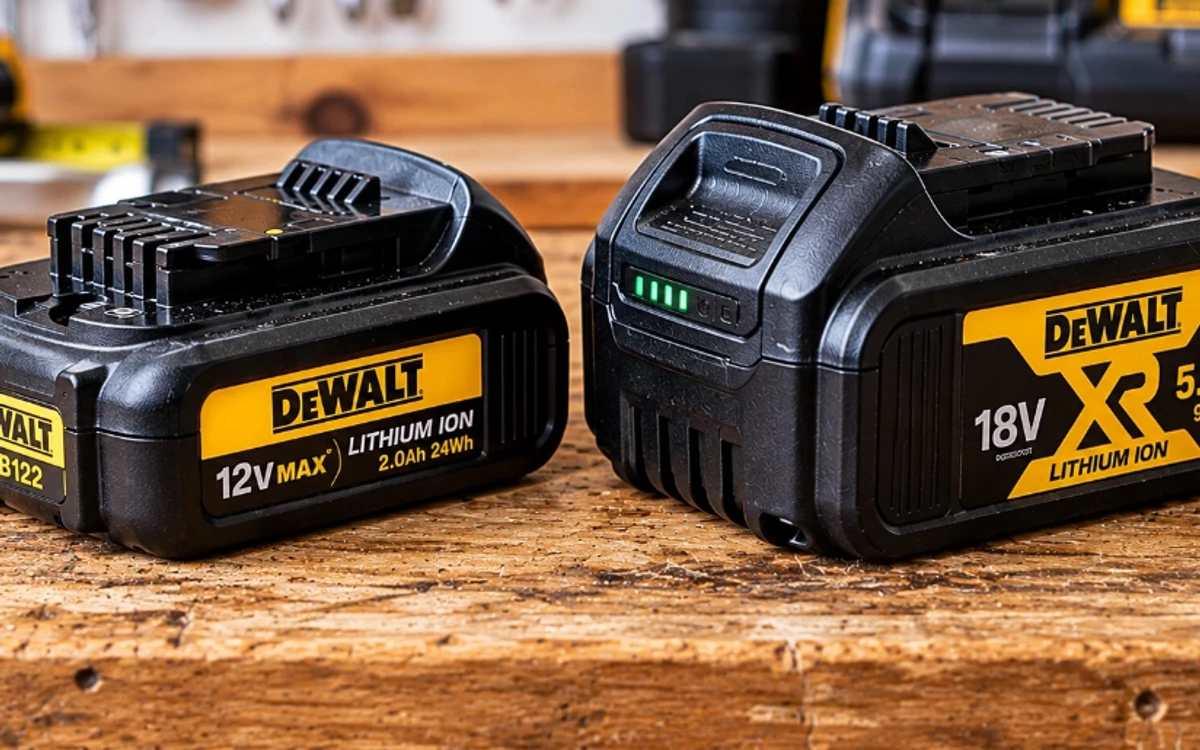
The main difference between 12V and 18V cordless drills comes down to a trade-off between portability/weight and raw power/torque.
For most homeowners, a 12V drill is the smarter everyday choice. It’s lighter, more maneuverable in tight spaces, and sufficient for the majority of household tasks. Reserve an 18V model for heavier construction, masonry, or frequent high-demand work.
This guide is based on manufacturer specifications, product documentation, and industry standards. We have not performed hands-on physical testing of these platforms.
12V vs. 18V Comparison Table
| Specification Feature | 12V Max Platform | 18V / 20V Max Platform |
|---|---|---|
| Average Weight | 1.8 to 2.5 lbs | 3.5 to 5.0 lbs |
| Typical Torque Range | 200 to 400 in-lbs | 450 to 1,200 in-lbs |
| Maximum Chuck Size | Typically 3/8-inch | 1/2-inch standard |
| Best Use Case | Shelving, furniture, light drilling | Decks, masonry, heavy mixing |
| Battery Charge Time | Faster (smaller packs) | Standard (larger capacity) |
The Case for 12V: The Practical Homeowner Choice
Most homeowners overestimate how much power they actually need. An 18V drill is built for professional job sites running large fasteners all day.
- Better Ergonomics: Many 12V models (like Bosch or Milwaukee M12) keep a compact head size, making them ideal for working inside cabinets or between joists.
- Less Fatigue: A lighter tool is much easier to use overhead or for extended periods.
- Lower Long-Term Cost: Replacement batteries are significantly cheaper due to fewer cells.
The Case for 18V: When You Need More Power
Choose 18V (or 20V Max) if your projects regularly involve:
- Drilling into masonry or concrete.
- Driving large lag screws or mixing materials.
- Expanding into outdoor power tools (blowers, mowers) on the same battery platform.
Understanding Voltage Labels
- “12V Max” is the same as 10.8V nominal — a marketing peak voltage when fully charged.
- “20V Max” is the same as 18V nominal — again, a common marketing term.
The actual performance difference matters more in real use than the number on the label.
Authoritative Sources & Citations
- American Society of Mechanical Engineers (ASME) standards on tool performance.
- National Renewable Energy Laboratory (NREL) reports on lithium-ion battery behavior.
Related DwellNinja Guides
- Best Cordless Drill for Typical Homeowners — Specific model recommendations.
- DeWalt vs. Milwaukee vs. Makita Drill Platforms — Platform ecosystem comparison.
DwellNinja Editorial Team
Objective Homeowner Advice
The DwellNinja Editorial Team researches manufacturer documentation, product specifications, warranties, and professional guidance to produce practical homeowner guides.
DwellNinja Newsletter
Practical homeowner tips, product comparisons, and useful updates are on the way.
Related Guides You Might Like
Best Cordless Drill for Typical Homeowners
Cut through the noise. We compare power, weight, battery platforms, and real-world usability to find the best cordless drill for everyday household DIY projects.
DeWalt vs. Milwaukee vs. Makita Drill Platforms
Compare the Big Three. We analyze battery compatibility, platform depth, and practical tool qualities for homeowners.