
Smart Thermostats: When They Actually Save Money
Look past the marketing. We analyze utility research and household HVAC habits to explain when smart thermostats deliver real savings and when they do not.
Editorial Research Standard
Our conclusions are based on relevant manufacturer specifications, product documentation, warranties, and professional guidance. The evidence used varies by guide and is disclosed below.
Learn more in our Editorial Policy.
Smart thermostat ads often claim up to 23% savings, but independent studies show more modest results — typically 8–12% on heating and cooling bills ($50–$100/year for many households). Payback can take 2–5 years depending on your initial purchase, installation costs, and utility habits.
When a Smart Thermostat Delivers Strong ROI
| Factor | High Savings Potential | Low/No Savings Potential |
|---|---|---|
| Occupancy | Away 8+ hours daily | Always occupied (24/7) |
| Existing Thermostat | Old mechanical or unprogrammed | Already well-scheduled programmable |
| HVAC Type | Standard forced-air furnace & AC | Heat pumps or radiant systems |
| Climate | Extreme seasons (hot/cold swings) | Mild/temperate (coastal zones) |
How Savings Work
- Geofencing & Scheduling: Uses your phone’s GPS to detect when you leave a boundary zone, automatically dropping the system into “Eco” mode.
- Occupancy Sensors: Integrated motion sensors detect movement. If no motion is sensed for 2 hours, it overrides the schedule.
- Adaptive Learning / Recovery: Learns how long your specific HVAC system takes to heat or cool the house, optimizing start times based on outdoor weather.
Technical Caveats to Consider
Heat Pumps & Auxiliary Heat
Traditional air-source heat pumps are highly efficient when maintaining a constant temperature. If you program an aggressive 5-degree temperature drop at night and ask for a 5-degree rise in the morning, the heat pump may activate backup electric resistance coils (“Auxiliary Heat”). Electric strip heat is 3 to 4 times less efficient, which can negate your nighttime savings.
Radiative Slow-Response Systems
Hydronic floor heating or steam radiators take hours to warm up or cool down. Setbacks do not work well here because the heating lag does not align with your daily schedule.
Top Recommendations
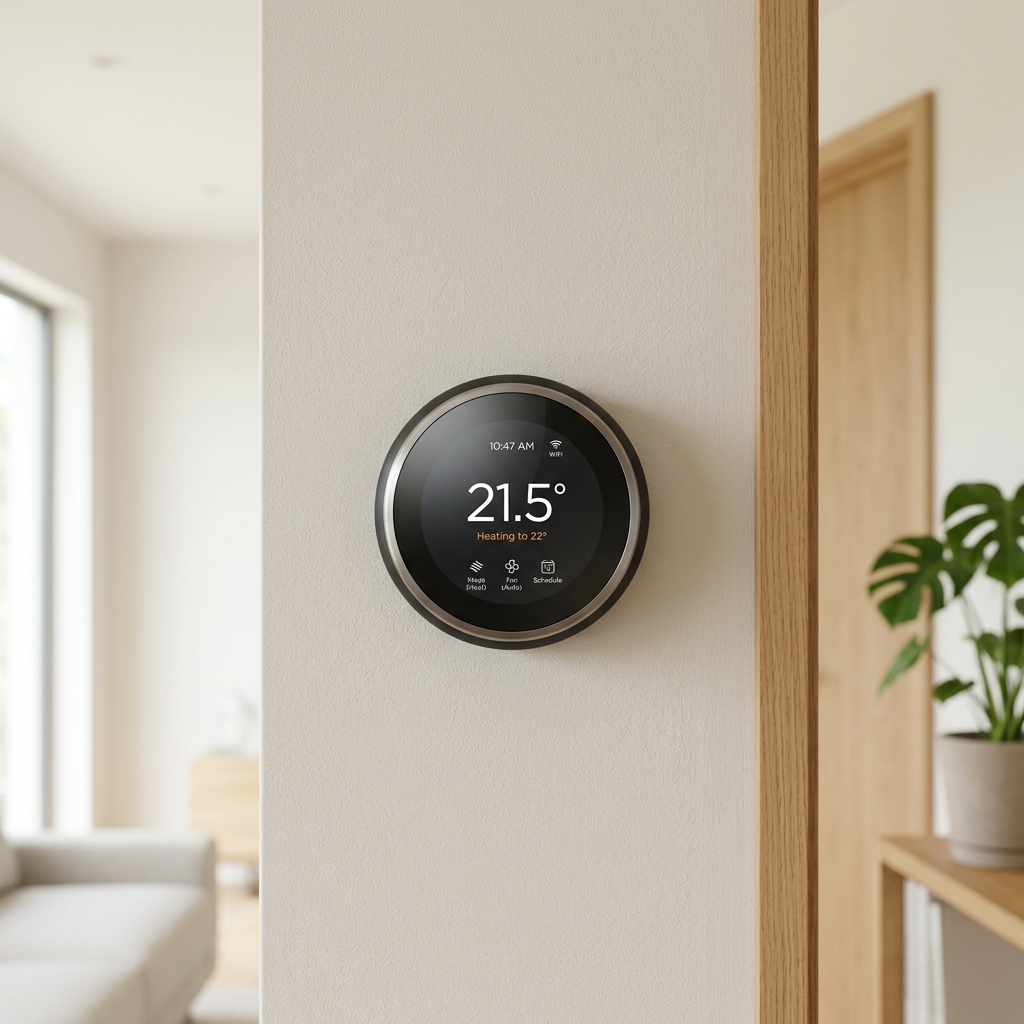
- Google Nest: Simple design, works without a C-wire in some setups, and qualifies for most utility rebate programs (typically $50–$75 off).
- Ecobee Premium: Excellent for multi-story homes, as it includes remote room sensors to balance hot and cold zones.
Bottom Line
Smart thermostats shine in homes with variable occupancy and conventional forced-air HVAC systems. In mild climates or always-occupied homes with good manual habits, actual savings may be minimal.
Authoritative Sources & Citations
- US EPA Energy Star Thermostat Program: Energy Star Smart Thermostats Overview (Accessed July 2026) — Independent verification of utility savings datasets and energy efficiency standards.
- Manufacturer installation and performance documentation for Google Nest and Ecobee.
Related DwellNinja Guides
DwellNinja Editorial Team
Objective Homeowner Advice
The DwellNinja Editorial Team researches manufacturer documentation, product specifications, warranties, and professional guidance to produce practical homeowner guides.
DwellNinja Newsletter
Practical homeowner tips, product comparisons, and useful updates are on the way.
Related Guides You Might Like
Smart Home Upgrades That Are Actually Worth It
Cut through the tech hype. We look at smart home devices that offer genuine energy savings, enhanced safety, and everyday convenience.
Best Smart Water Leak Detectors for Homeowners (2026 Comparison)
Compare battery life, alerts, hub requirements, and shutoff options for the best smart water leak detectors, spot sensors, and water monitors.